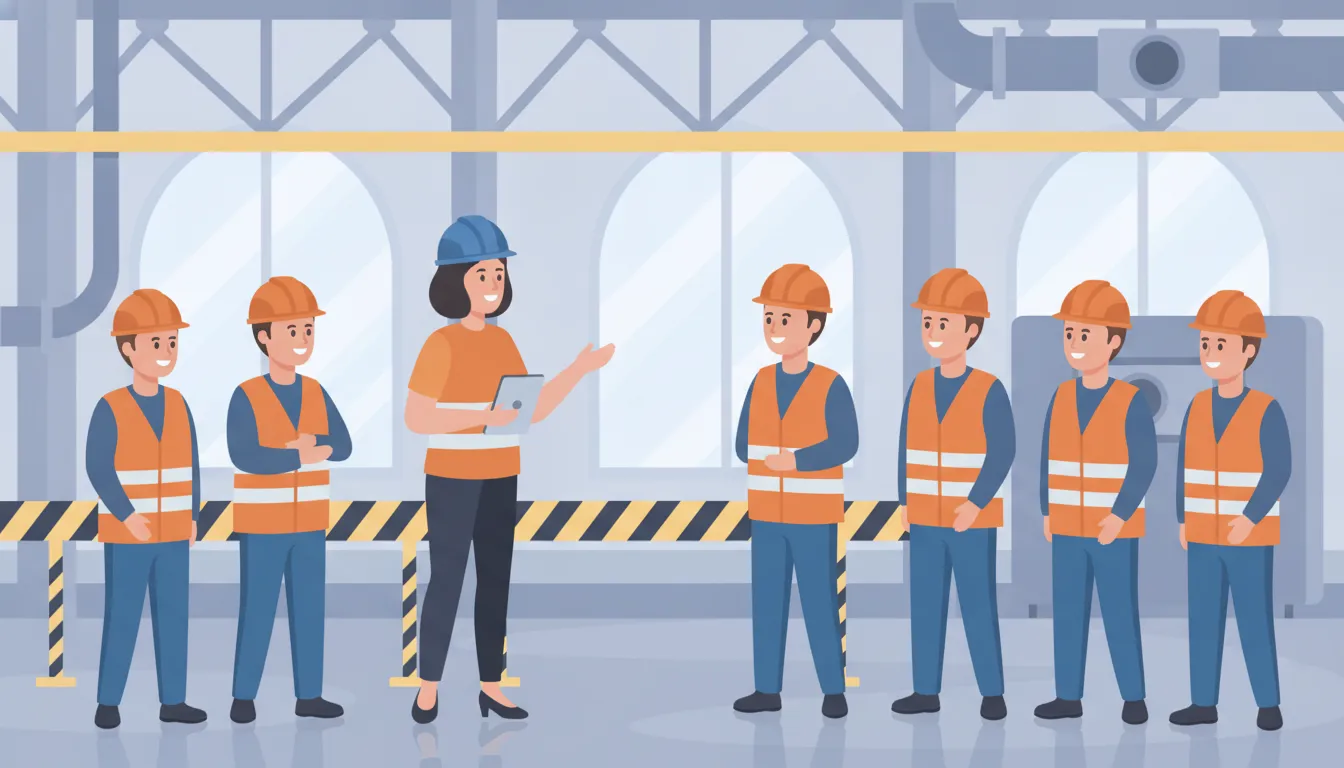
A safety program is only as strong as the decisions managers make when work gets busy. A course can explain policies, but effective leadership shows up in what managers notice, reinforce, and discuss every day.
The best safety leadership training for managers builds practical skills in hazard recognition, emergency response planning. And influential communication, then reinforces those skills through ongoing practice, coaching, and measurable goals.
OSHA describes management leadership as providing the vision and resources needed for an effective safety program, including visible commitment through actions such as safety walk-arounds. That makes the right training less about checking a compliance box and more about changing daily behavior. Build stronger leadership habits with 2-minute daily coaching. The first question is why that shift matters to managers and the teams they lead.
Why Does Safety Leadership Training Matter for Managers?
Managers shape what employees believe the organization truly values. A policy can describe the right behavior, but daily decisions reveal whether safety guides the work or simply follows it.
That is why effective safety leadership training for managers goes beyond rules, reporting procedures, and annual compliance reminders. It helps managers turn safety expectations into visible habits that teams can understand, practice, and trust.
What happens when training stays reactive?
Reactive training usually begins after an incident, near miss, inspection finding, or missed requirement. The response may address an immediate gap, yet it often leaves the underlying leadership pattern unchanged.
Managers might remind people to wear protective equipment after a violation. They might review a procedure after an injury. Those actions matter, but they do not necessarily answer the questions employees carry into the next shift:
- Will production pressure override a safety concern?
- Can I stop work without being blamed?
- Does my manager want honest information about hazards?
When training focuses only on compliance, managers can treat safety as another task to verify. Employees then learn to complete forms and repeat required language without building the judgment or confidence needed to prevent problems.
How does proactive leadership change the workplace?
Proactive leadership makes safety part of how managers plan, communicate, and make tradeoffs. It gives them a practical way to notice risks before an incident and respond to concerns without minimizing them.
OSHA states that management provides the leadership, vision, and resources needed to implement an effective safety and health program. That leadership standard places responsibility above the front line. Managers must make safety possible, not merely encourage it.
Visible commitment is equally important. OSHA recommends that leaders demonstrate and communicate their commitment through their own actions. A manager who joins safety walk-arounds, asks thoughtful questions, and follows through on reported hazards sends a stronger message than a poster or policy memo.
These actions also create useful feedback loops. A walk-around can reveal an unsafe condition, but it can also show whether employees feel comfortable speaking up. The manager's response becomes part of the training. Listening carefully, thanking the employee, and documenting the next step teaches that reporting leads to action.
What should managers practice?
Look for training that builds repeatable behaviors, not just awareness. Managers should practice discussing hazards before work begins, asking open questions, responding to near misses, and explaining why a control matters.
They also need to learn how to balance urgency with care. A strong safety leader can pause a task, involve the right people, and adjust the plan without framing prevention as an obstacle.
The result is a culture where safety is reinforced in ordinary moments. Managers lead through decisions, conversations, and follow-through. Training matters because it gives them the skills and structure to make those moments consistently safer.
What Should You Look for in Safety Leadership Training for Managers?
The strongest safety leadership training for managers connects safety expectations to the decisions managers make every day. It should help them recognize risks, respond under pressure, communicate with influence, and reinforce safe behavior during ordinary work.
That practical focus matters more than a polished course title. The CDC's Foundations for Safety Leadership program, for example, teaches supervisors specific leadership skills intended to foster a safer jobsite climate. Read the CDC training overview to see how leadership skills can sit at the center of safety instruction.
Does the curriculum cover the decisions managers face?
Look for clear instruction in three core areas: hazard recognition, emergency response planning, and influential communication. These skills help managers identify exposure before an incident, prepare teams for disruption, and make safety expectations credible.
Hazard recognition should move beyond definitions. Managers need practice spotting changing conditions, asking useful questions, and deciding when work should pause. Emergency response planning should clarify roles, escalation paths, communication responsibilities, and recovery steps.
Influential communication is equally important. Managers must be able to explain why a control matters, invite concerns, and address unsafe behavior without creating silence or resentment. Training should include realistic conversations, not only presentations about policy.
Are the instructors qualified to teach leadership and safety?
Ask who designed the curriculum and who delivers it. Qualified instructors should understand safety management, adult learning, and the operating realities managers face. They should be able to answer technical questions without turning the session into a compliance lecture.
Also check whether instructors can adapt examples to your work environment. A manager in a warehouse, laboratory, or field operation may face different hazards and response constraints. Relevant scenarios make the learning easier to apply.
Will managers practice the skills instead of just hearing about them?
Prefer interactive formats that use scenarios, role-play, guided discussion, and short application exercises. A manager should leave having practiced a safety conversation, evaluated a hazard, or worked through an emergency decision.
Selection should also account for follow-up. Ask whether managers receive prompts, coaching, peer accountability, or opportunities to revisit difficult situations. Safety leadership is a behavior system, not a single attendance event.
How will the organization measure progress?
Choose training with observable outcomes. Managers might track completed safety conversations, hazard reports, corrective-action follow-through, or response-plan exercises. These measures show whether learning is reaching daily operations.
For a broader foundation in manager development, see this guide to management training for new managers. The best program makes expectations clear, gives managers a way to practice, and connects development to safer decisions at work.
Which Safety Leadership Skills Does the Training Actually Build?
Strong safety leadership training turns broad expectations into behaviors managers can use during real work. The goal is not to make managers safety experts overnight. It is to help them notice risk, influence decisions, and create conditions where people speak up early.
A useful program should build these practical skills:
Making safety commitment explicit
Managers learn to connect safety with daily decisions, staffing, scheduling, equipment, and production priorities. They practice stating what safe work looks like and explaining why it matters. The commitment must appear in actions, not only policy language. OSHA identifies leadership, vision, and resources as foundations of an effective safety and health program.
OSHA guidance on management leadership provides a useful benchmark for evaluating this part of a program.
Recognizing hazards and assessing risk
Managers need a repeatable way to spot hazards before an incident occurs. Training should teach them to examine the work environment, identify who could be harmed, estimate the seriousness of the risk, and choose controls that fit the situation.
The skill is more than finding obvious physical hazards. It includes noticing unclear procedures, fatigue, rushed handoffs, missing equipment, and other conditions that can make unsafe decisions more likely.
Leading visible walk-arounds
Safety walk-arounds give managers a structured opportunity to observe work, ask useful questions, and remove obstacles. They should not feel like surprise inspections. The best programs teach managers to listen, thank employees for raising concerns, and follow through on what they find.
OSHA emphasizes that leaders should visibly communicate their commitment and set an example through their own actions. That makes presence credible when it is consistent, specific, and followed by action.
Communicating with influence
Safety messages compete with deadlines, habits, and peer pressure. Managers learn to explain risk in concrete terms, adapt their message to the audience, and make the safe choice easier to understand. They also practice asking open questions instead of delivering lectures.
CDC's Foundations for Safety Leadership program describes supervisor training as a way to develop leadership skills that support a safer jobsite climate. That focus is important because communication shapes whether people accept, question, or quietly bypass a control.
Managers can strengthen this skill by practicing building psychological safety during everyday conversations.
Preparing for emergencies
Training should help managers plan responses before pressure peaks. That includes clarifying roles, escalation paths, communication methods, evacuation decisions, and post-incident responsibilities. A plan becomes useful when managers rehearse it and identify gaps with the people expected to use it.
Coaching, feedback, and accountability
Effective managers correct unsafe behavior without humiliating people. They learn to describe the observed action, explain the risk, ask what got in the way, and agree on a safer next step. They also recognize good decisions so safe behavior becomes visible and repeatable.
Accountability still matters. It means setting clear expectations, checking whether support was provided, and addressing repeated disregard for controls. It does not mean assigning blame for every error. A program that develops these skills gives managers a practical framework for improving safety without shutting down honest reporting.
These capabilities align with the leadership skills, hazard recognition, emergency response planning, and influential communication emphasized in safety leadership training research and practice. Review the CDC training reference for additional context.
Is a One-Day Course Enough, or Do Managers Need Ongoing Practice?
A one-day course can create shared language and introduce essential concepts. It rarely creates reliable behavior by itself. Managers still need chances to apply the skills, receive feedback, and adjust their approach during real work.
That distinction matters in safety leadership. A manager may understand hazard recognition during a classroom exercise, then miss a warning sign during a rushed shift. Practice closes the gap between knowing what to do and doing it consistently.
Research supports combining instruction with reinforcement. A study on safety leadership training found that adding coaching improved changes in employee safety behavior. Read the findings in the published safety leadership study.
| Dimension | One-off classroom course | Ongoing daily practice + coaching |
|---|
| Retention and completion | Creates an intensive learning moment, but follow-through can fade after the session. | Short, repeated activities fit working routines and create more opportunities to complete practice. |
|---|
| Behavior change | Explains the desired behavior and may include limited rehearsal. | Builds habits through application, feedback, and coaching tied to current situations. |
|---|
| Reinforcement and cost | Requires time away from work and periodic refreshers to maintain momentum. | Uses smaller moments and peer accountability to reinforce skills without relying on another major event. |
|---|
The table is not an argument against classroom learning. A focused course can give managers a strong foundation, especially when they need a common standard quickly. The question is what happens after the course ends.
Look for a program that turns principles into repeatable actions. Managers should practice speaking up about hazards, planning for emergencies, and communicating expectations without creating fear. Each activity should connect to decisions they make on the job.
Peer accountability adds another layer. Consistent practice makes safety leadership visible, while peers can reinforce commitments and surface patterns that a manager may miss. This approach treats development as part of the work, not a separate annual event.
Completion data also reveals whether a program fits daily reality. Bunch reports 83% completion for its two-minute micro-coaching, compared with 20% to 30% for traditional programs. Those figures come from Bunch's own materials, so treat them as a product benchmark rather than a universal industry average.
For a practical framework, explore coaching training for managers. The strongest option is usually a blended model: teach the core principles, then reinforce them through frequent practice, coaching, and measurable follow-through.
How Do You Measure Whether Safety Leadership Training Is Working?
Evaluate safety leadership training by looking for changes in daily behavior before waiting for injury statistics to move. A strong review combines leading indicators, outcome measures, and direct feedback from the people doing the work.
Start with the goals set before training begins. OSHA recommends realistic, measurable safety goals that emphasize preventing injuries and illnesses, rather than focusing only on injury and illness rates. OSHA's management leadership guidance also notes that management provides the vision and resources needed for an effective safety program.
Which leading indicators should managers track?
Leading indicators show whether safer conditions and habits are becoming more consistent. Track a small group of measures that managers can influence directly.
- Observed safe behaviors: Record how often employees follow critical procedures during routine observations. Note whether managers reinforce the behavior or correct it constructively.
- Near-miss reporting: Monitor the number and quality of near-miss reports. An early increase can show that employees feel safer speaking up, not that conditions suddenly became worse.
- Hazard identification: Track hazards identified, the time taken to assign corrective action, and the percentage closed by the agreed deadline.
- Manager walk-arounds: Count completed safety walk-arounds by manager and team. Review whether each walk-around includes questions, listening, and follow-through.
- Team feedback: Ask employees whether managers invite concerns, respond respectfully, and explain what happened after a report. Short pulse surveys can reveal changes that incident logs miss.
Use these indicators together. A high walk-around count means little if hazards remain open or employees say conversations feel performative. Quality matters as much as frequency.
How should outcomes fit into the review?
Review incident rates, recordable injuries, lost-time cases, and recurring event types over time. Compare similar periods, locations, and work activities when possible. Avoid treating one month as proof of success.
Outcome data is important, but it is a lagging signal. A lower incident rate may reflect fewer exposure hours, seasonal work, or random variation. Pair it with leading indicators to understand what changed.
Also examine whether corrective actions prevent repeat events. If the same hazard appears after training, the issue may involve resources, equipment, staffing, or unclear accountability. Training cannot compensate for missing management support.
What does a practical measurement cycle look like?
- Set a baseline. Review the previous eight to twelve weeks of observations, reports, walk-arounds, feedback, and incidents.
- Choose two or three goals. Make each goal specific, measurable, and connected to injury prevention.
- Check progress weekly. Have managers review the indicators with their teams and record barriers, actions, and owners.
- Review monthly. Compare behavior trends with incident outcomes. Ask employees what improved and what still gets in the way.
- Adjust the support. Repeat practice, provide coaching, or address operational barriers when the measures do not improve.
For example, a warehouse manager might set a goal to complete four meaningful safety walk-arounds each month. Identify ten hazards, and close 90% of assigned actions within seven days. The manager records each conversation, reviews near-miss quality, and asks the team whether follow-up is visible.
After three months, the manager compares those results with observed safe behaviors, recurring hazards, and incident trends. If reporting rises while overdue corrective actions fall, the training may be strengthening participation. If incidents persist, the next step is to investigate the work system, not simply repeat the course.
Help your managers turn safety awareness into daily habit with Bunch's 2-minute coaching.
Frequently Asked Questions
What skills should managers develop through safety leadership training?
Managers should practice hazard recognition, emergency response planning, and influential communication. Strong programs also build the ability to set expectations, listen to workers, and turn concerns into timely action.
Why is management leadership important for workplace safety?
Management leadership gives safety programs direction, resources, and visible support. The Occupational Safety and Health Administration recommends that leaders demonstrate commitment through their decisions and actions, including participation in safety activities. OSHA management leadership guidance
Is a one-day safety course enough for managers?
A one-day course can establish a foundation, but managers need ongoing practice to apply the skills under real workplace pressure. Coaching, peer accountability, and short practice cycles make safety behaviors easier to repeat and improve.
How can managers tell whether safety leadership training is working?
Measure whether managers are applying the training, not only whether they completed it. Track observable actions such as safety conversations, hazard follow-up, emergency readiness, and progress toward realistic injury-prevention goals. Review the results regularly and adjust the practice.
Choosing the right safety leadership training comes down to what happens after the course ends. Look for a program that builds practical skills, turns them into repeatable daily habits, and gives managers consistent coaching and accountability. That mix is what turns awareness into a safer, more connected workplace.
Start building safer leadership habits today with Bunch's micro-coaching app.