Bunch’s fundraising campaign is live • Bunch’s fundraising campaign is live • Bunch’s fundraising campaign is live • Bunch’s fundraising campaign is live • Bunch’s fundraising campaign is live • Bunch’s fundraising campaign is live • Bunch’s fundraising campaign is live • Bunch’s fundraising campaign is live • Bunch’s fundraising campaign is live • Bunch’s fundraising campaign is live • Bunch’s fundraising campaign is live •
A project manager can keep a plan current and still lose alignment. Priorities shift, stakeholders pull in different directions, and a delayed decision can turn into team conflict. The harder part is often not knowing a framework. It is choosing the right conversation when the pressure is high.
Coaching for project managers builds a practical space to examine those moments, rehearse clearer communication, and turn experience into better judgment. Research on project-manager competencies connects leadership, communication, and emotional intelligence with project success, while workplace coaching research reports positive organizational outcomes. The right support may come from self-guided practice, peers, a human coach, or AI, depending on the situation and the level of accountability needed.
For technology teams, the value becomes visible in ordinary work. Coaching can clarify ownership before delivery slips, address tension before it hardens, and help people grow without adding another meeting every week. The first step is identifying which parts of the role coaching can improve most.
What does coaching for project managers actually improve?
Coaching for project managers is a structured way to turn live project challenges into better decisions and repeatable leadership habits. Instead of separating development from the work, a coach helps a manager examine a situation, consider different responses, and choose an action they can apply with the team.
Judgment when the project gets messy
Project managers rarely make decisions with complete information. Priorities shift, dependencies slip, and stakeholders may want different outcomes. Coaching creates space to separate facts from assumptions, identify the real decision, and assess the likely effect on delivery and relationships. Over time, that practice can make judgment more deliberate without making it slower.
This matters especially when the technically easiest option is not the most workable one. A strong decision may account for team capacity, customer impact, risk, and the trust required to execute the plan. Coaching does not remove uncertainty. It helps managers respond to uncertainty with a clearer process.
Communication that builds alignment
Good project communication is more than sending status updates. It includes explaining tradeoffs, setting expectations, listening for concerns, and adjusting the message for an engineer, executive, customer, or cross-functional partner. A systematic review of project-manager competencies found that leadership, communication, and emotional intelligence are among the personal and social competencies studied in relation to project success (systematic review of project-manager competencies).
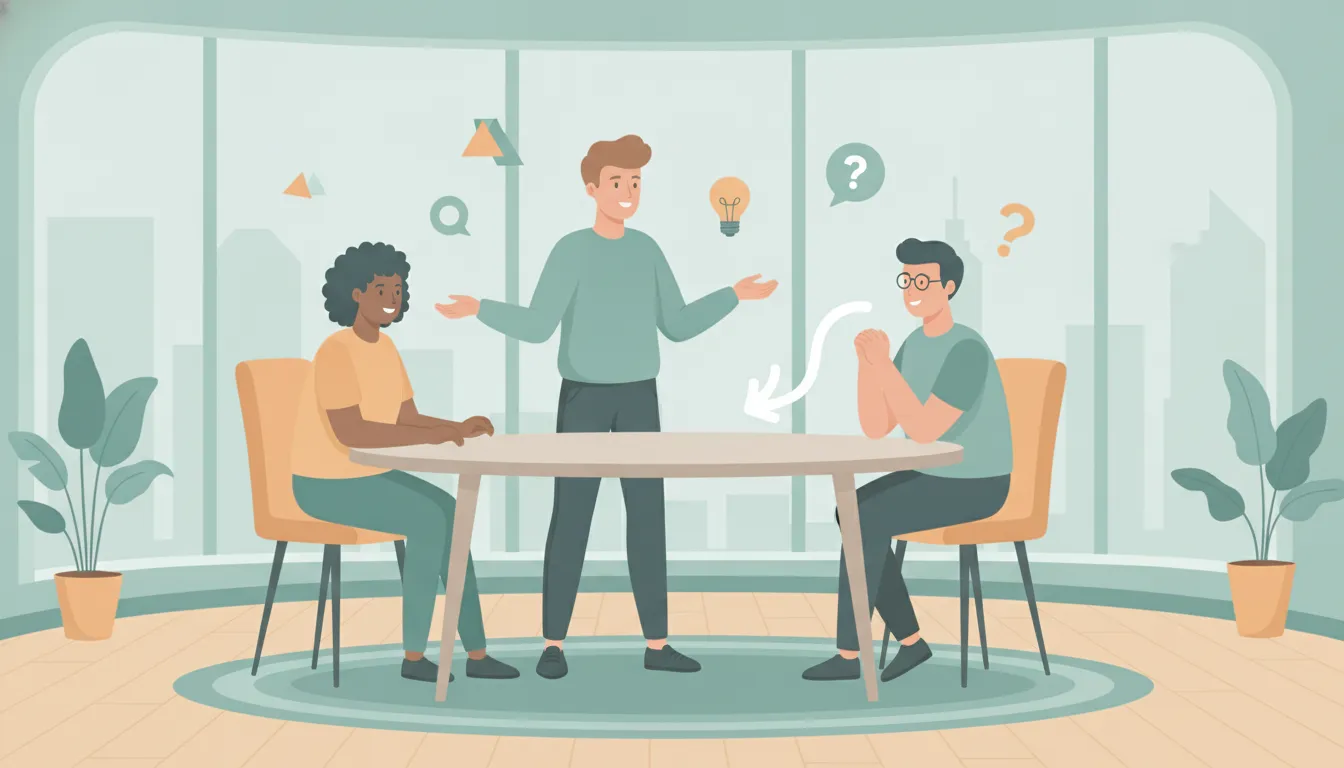
Coaching can help a manager prepare for a difficult conversation before it happens. The manager can clarify the outcome they want, test the tone of a message, and plan questions that invite useful information. That preparation supports alignment without relying on pressure or overexplaining.
People-centered leadership and follow-through
Project delivery depends on people who understand their responsibilities and feel able to raise risks early. Coaching can strengthen delegation, feedback, conflict navigation, and the ability to support different working styles. Research on coaching for new managers describes benefits related to interpersonal skills, performance, the transition into management, and work-life integration (research on coaching and new-manager development).
The practical test is simple: after the conversation, does the manager know what to try next, and will they revisit what happened? That loop turns insight into behavior. It can help project managers lead with more consistency while still adapting to the people and circumstances in front of them.
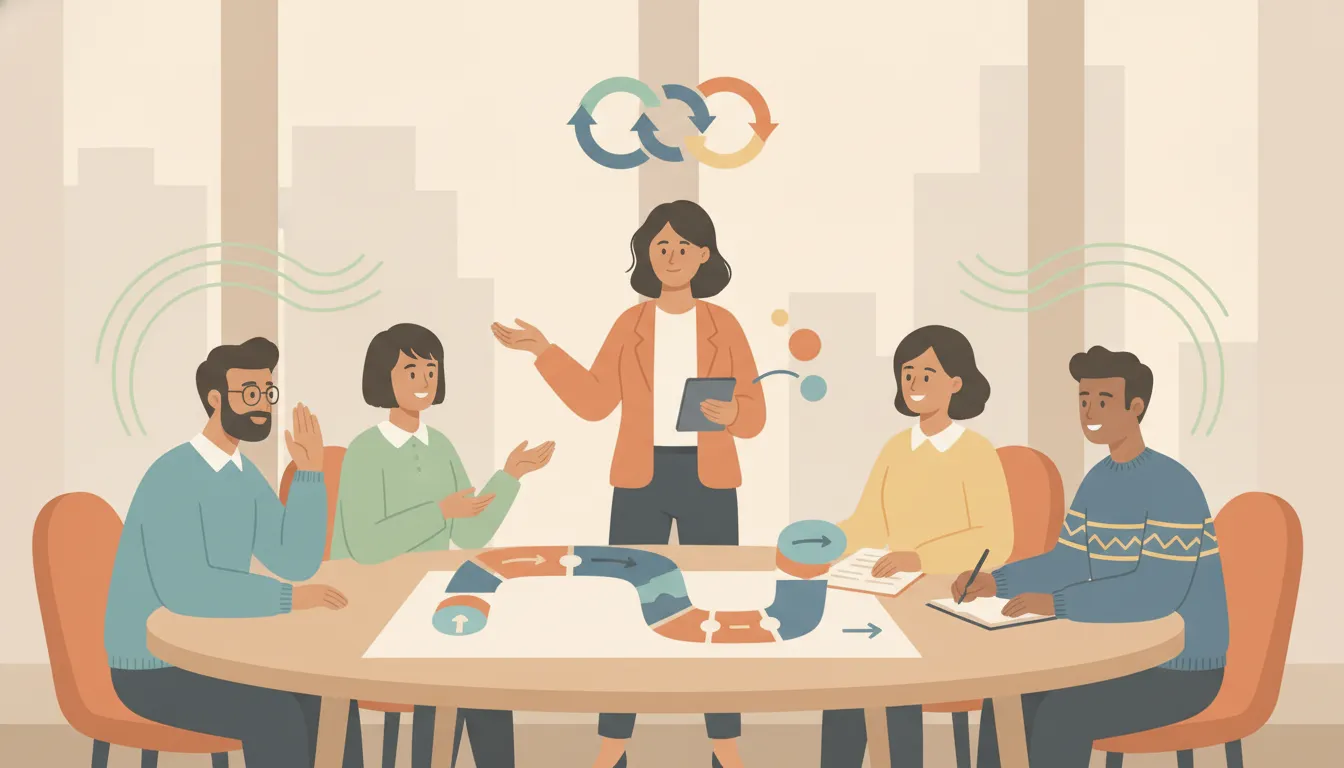
Coaching practice works best when it connects to real project conversations.
Where do project managers need coaching most?
Project managers rarely struggle because they cannot build a schedule. The harder moments happen when the plan meets competing priorities, unclear ownership, or human reactions. Coaching helps turn those moments into practice: examine what happened, choose a better response, and test it on the next conversation.
How can coaching improve alignment?
Imagine a product manager promising a launch date while engineering is still evaluating a major dependency. Marketing has already prepared an announcement, and a senior stakeholder expects weekly progress updates. The project manager may need to reset expectations without making any team look responsible for the gap.
A coaching conversation can help them separate facts from assumptions, identify who needs to be involved, and frame a decision around the project goal. Project managers continuously work with stakeholders to maintain relationships and align expectations with those goals, according to the University of Maryland's project-management course materials. Stakeholder identification, shared vision, and clear updates give that work structure.
What helps when conflict slows delivery?
Conflict may surface as a design review that goes nowhere, a developer who feels dismissed, or two functions arguing over which requirement should take priority. Avoiding the tension can preserve a calm meeting while allowing the underlying issue to grow.
Coaching gives the project manager a place to rehearse active listening, ask neutral questions, and distinguish a disagreement about the work from a breakdown in trust. Conflict-handling techniques are a recognized part of project-management development. The practical goal is not to make every person agree. It is to help the team understand the tradeoff, decide what happens next, and keep working relationships intact.
How do delegation and team growth connect?
A project manager under delivery pressure may keep the riskiest decisions, rewrite every update, or assign tasks without explaining the outcome. That approach can feel efficient for a week. It also limits team growth and leaves the manager as the bottleneck.
Coaching can help the manager delegate with clearer context: define the result, name the decision rights, agree on a check-in, and let the owner choose the method. Resource planning and team management are connected skills for project professionals, and collaboration can help motivate people toward project success. The project-leadership guidance also emphasizes cooperation as a way to show what people can achieve together.
These challenges become sharper in hybrid teams, where silence in a channel can be mistaken for agreement and informal hallway context is missing. A short coaching prompt before a stakeholder call, conflict conversation, or delegation decision can help the project manager lead deliberately instead of reacting to pressure.
Which approach to coaching for project managers fits your team?
Project managers rarely need one development method for every challenge. A quick reflection may help you prepare for a difficult conversation, while a peer group can reveal options you would not see alone. Human coaching can add depth, and AI support can make practice available when the workday is moving fast.
The right choice depends on the problem, the time available, and the level of accountability your team needs. Project leadership involves stakeholder alignment, communication, resource planning, and team development, so the most useful approach should connect learning to those real situations.
Ways to support project-manager developmentApproachBest fitTradeoff to considerSelf-guided practiceBuilding a specific habit, such as active listening, delegation, or clearer stakeholder updates.Flexible and private, but progress depends on the manager creating time and applying the learning.Peer learningComparing approaches to shared challenges across product, engineering, design, or operations.Creates perspective and social accountability, but the quality depends on participation and psychological safety.Human coachingWorking through a complex relationship, recurring conflict, career transition, or high-stakes decision.Offers tailored challenge and reflection, but requires access, scheduling, and a coach who understands the context.AI supportGetting immediate prompts, rehearsal, or a starting point before a meeting, feedback conversation, or decision.Convenient and repeatable, but it should complement human judgment, relationships, and team context.
How should you choose?
Start with the distance between the current situation and the outcome you need. If a manager knows the skill to practice, self-guided learning may be enough. For example, they can rehearse a delegation conversation, then test the approach during the next sprint.
Choose peer learning when the challenge benefits from multiple perspectives. A group of project managers can compare how they communicate changing priorities or maintain trust across remote and hybrid teams. Peer learning is especially useful when the goal is shared language and mutual accountability. Bunch describes private learning groups as a way to support collaborative growth and social accountability.
Use human coaching when the situation is sensitive, ambiguous, or recurring. A coach can help a project manager examine assumptions, notice patterns, and prepare for a conversation where the relationship matters as much as the immediate delivery issue. Coaching can support the development of individuals and teams, but it is not the right response to every situation. Clear role expectations, process changes, or formal performance action may also be necessary.
AI support works well as a practice layer between formal sessions. A project manager can use AI coaching support for managers to reflect on a stakeholder exchange, generate questions, or rehearse a response before asking a peer or coach for input. The strongest model is often blended: brief self-guided practice for consistency, peers for perspective, human coaching for depth, and AI for timely support.
Evaluate the approach by asking one practical question: will it help this manager take a better action in the next project moment? If not, change the method rather than adding more content.
How can technology teams make coaching part of the workday?
Coaching becomes useful when it is attached to work already happening. A project manager does not need to leave an active delivery cycle to practice. The next stakeholder update, planning discussion, or team decision can become a focused development opportunity.
Prepare before the next meaningful moment. Choose one interaction within the next day, such as a scope discussion, sprint planning meeting, or conversation about a missed commitment. Name the outcome you want, the person or group involved, and the tension you expect. Then select one behavior to practice, such as asking an open question, clarifying ownership, or listening before proposing a solution. Project managers need interpersonal skills to manage people and projects effectively, not only process knowledge. Research on project people management highlights those skills as part of effective project leadership.
Practice the conversation in a low-risk format. Take two minutes to say your opening sentence aloud. You can also write three possible questions, rehearse with a peer, or ask an AI coach to challenge your assumptions. Keep the practice close to the real situation. If a product partner wants a date that engineering cannot support, rehearse how you will acknowledge the goal, explain the constraint, and invite a tradeoff. The aim is not a perfect script. It is enough preparation to respond with intention instead of reacting under pressure.
Apply the behavior during the project interaction. Use the selected behavior in the meeting or message. Make the project context visible by connecting the discussion to scope, timing, capacity, quality, or team commitments. Stakeholder work changes across predictive and adaptive environments, so adjust your questions to the way decisions are made on your team. In either setting, the project manager's job includes maintaining relationships and aligning expectations with project goals. Stakeholder-management guidance reinforces that connection.
Reflect while the details are fresh. Afterward, record what happened in three lines: what worked, where the conversation shifted, and what you would try next time. Include the other person's response, not only your own performance. Did the team understand the decision? Did the stakeholder leave with a realistic expectation? Did a quieter contributor have a chance to shape the outcome?
Repeat with one small adjustment. Carry the lesson into the next relevant interaction. Change one variable, such as the timing of your question, the level of detail, or who you invite into the decision. Over time, this prepare-practice-apply-reflect-repeat loop turns coaching into a normal part of delivery. It also gives peers, human coaches, or AI support a concrete situation to discuss, rather than an abstract leadership problem.
Is AI coaching enough for project managers?
Sometimes. AI coaching can be an effective first layer of support when a project manager needs a quick prompt before a difficult conversation. A way to rehearse a scenario, or a short reflection after a meeting. It is available when the issue is fresh, which makes it easier to turn an everyday project moment into practice.
That speed matters because project leadership develops through repeated decisions, not occasional theory. A project manager can use AI to test different ways to frame a stakeholder update. Prepare questions for a one-to-one, or think through how to delegate a task without removing ownership. Short, consistent practice can build awareness of habits over time.
Where can AI coaching help most?
AI is particularly useful for repetition and scenario practice. It can help you role-play a resistant stakeholder, explore the likely consequences of a message, or generate reflection questions after conflict. It can also help you organize your thinking before a decision. These exercises are valuable because project work depends on interpersonal skills as well as schedules and tools. The University of Maryland identifies skills such as negotiation, active listening, emotional intelligence, and servant leadership as relevant to project work: learn more about project people management.
However, AI does not see every relationship, incentive, or unspoken concern in your team. It cannot take responsibility for a decision, repair trust after a serious conflict, or replace the judgment that comes from knowing your people and your organizational context. Its suggestions should be treated as options to examine, not instructions to follow automatically.
When should project managers add human support?
Peer accountability adds something AI cannot provide: another person who knows the context and can notice whether you followed through. A peer group can also expose you to approaches from different teams and create space for honest reflection. Human coaching can go further when the situation is sensitive, recurring, or tied to a broader leadership pattern. A coach or experienced manager can challenge assumptions, read nuance, and help connect behavior with impact.
Privacy should shape the choice, too. Avoid entering confidential project details, personal information. Or sensitive employee issues into any tool unless your organization has approved that use and you understand how the information is handled. When the stakes are high, anonymize the scenario and bring the real conversation to an appropriate human support channel.
The strongest approach is usually combined: use AI for immediate practice, repetition, and preparation; peers for accountability; and human coaching for judgment, context, and difficult relational work. The next questions address how to choose and apply these forms of support.
FAQs: What do project managers ask about coaching?
What topics does a project management coach cover?
Common topics include planning, stakeholder communication, risk conversations, delegation, team communication, conflict, and decision-making under pressure. The right focus depends on the project, team, and situation. These areas reflect the interpersonal skills project leaders use to guide, motivate, and direct others. Source
How can coaching help when stakeholders are not aligned?
Coaching can help you identify whose expectations differ, clarify the project vision, and prepare a communication plan for the next conversation. Stakeholder work includes maintaining relationships while keeping expectations aligned with project goals, not simply sending more status updates. Source
Can coaching improve delegation and team growth?
Yes. Coaching can help a project manager examine how work is assigned, where ownership is unclear, and what support each person needs. It can also support development at both the individual and team level, rather than treating delivery problems as purely process failures. Source
Is AI coaching enough for a project manager?
AI can provide immediate prompts, reflection questions, and practice support. It should complement human judgment and real team conversations, not replace responsibility, context, or human connection. Use peers or a human coach when the situation involves sensitive conflict, organizational politics, or consequences that require deeper context.
When should a project manager choose peer learning or human coaching?
Choose peer learning when shared examples, accountability, and collaborative problem-solving are useful. Choose human coaching when you need tailored challenge, confidential reflection, or help applying a new behavior to a high-stakes situation. Self-guided practice can reinforce either option between conversations.
Rick McCartney, DNP, is the innovative CEO of Bunch.ai, an AI-driven leadership coach. With a commitment to leveraging technology for global impact, Rick integrates clinical insights with strategic thinking to empower leaders in enhancing their organizations and teams.